
If you’ve ever faced the frustration of dull knives or worrying about hygiene when preparing meals, you’re not alone. Choosing the right chopping board can make all the difference in your kitchen, especially when deciding between titanium and stainless steel chopping boards. Both offer durability and a sleek look, but their performance and care needs vary significantly. Whether you’re a home cook passionate about precision or simply after a hygienic, long-lasting board, understanding these differences is key. Let’s cut through the noise and explore which material truly suits your kitchen needs.
Understanding the Materials – A Quick Primer
When it comes to chopping boards, the material makes all the difference – especially in kitchens where hygiene and durability are top priorities. Stainless steel is a common choice, made primarily from iron alloyed with chromium, typically around 10-12%, which gives it excellent resistance to rust and stains. In most homes and professional kitchens, stainless steel boards are valued for their toughness and ease of cleaning. They’re non-porous, so bacteria have no place to hide, making them a hygienic option that meets food safety standards. Plus, they’re often sleek and modern, blending well in contemporary kitchen designs.
On the other hand, titanium cutting boards are a newer, premium alternative gaining traction around the world. Titanium as a metal is renowned for its exceptional strength-to-weight ratio and superior corrosion resistance. It naturally resists bacteria because of its non-porous surface and is incredibly lightweight compared to stainless steel. Sourced from highly refined titanium alloys, these boards are far less common but increasingly popular, particularly among home chefs and food enthusiasts looking for a durable, hygienic cutting surface that’s gentle on knives.
Both materials bring unique advantages rooted in their chemical properties and manufacturing, shaping their use in the diverse cooking environments. Understanding this foundation helps when choosing the right board for your specific needs.
Key Differences – Head-to-Head Comparison
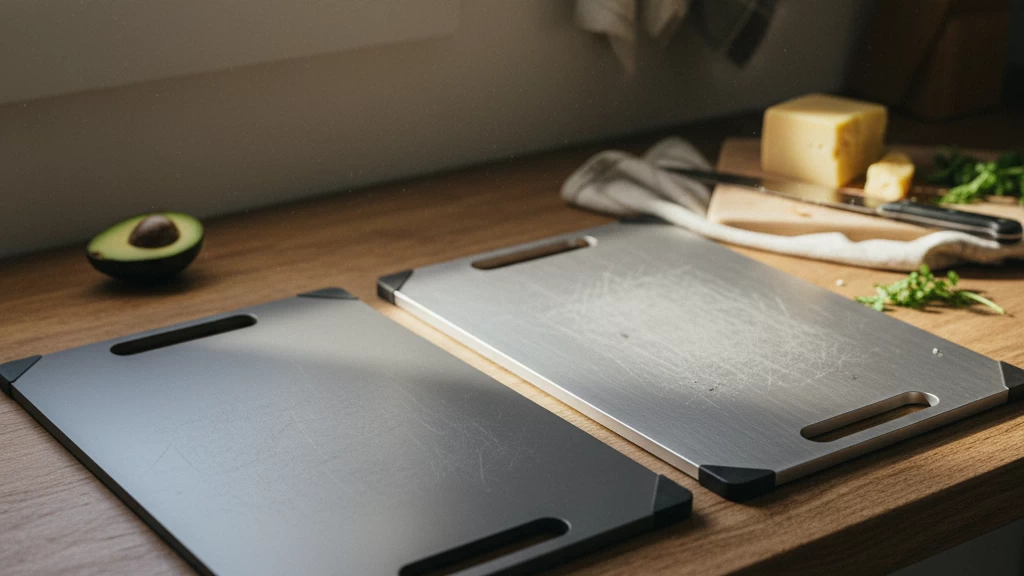
When choosing between titanium and stainless steel chopping boards, several factors are worth comparing. Here’s a quick look at how they stack up in durability, knife friendliness, hygiene, weight, and maintenance — all tailored for kitchens.
Durability and Build Quality
| Feature | Titanium | Stainless Steel |
|---|---|---|
| Hardness | Very hard, highly scratch-resistant | Hard, but prone to dents and scratches |
| Corrosion Resistance | Exceptional, resists rust fully | Good corrosion resistance (depends on grade) |
| Lifespan | Long-lasting, resists wear | Durable but can show wear over time |
| Impact Resistance | Tough but can dent with force | More likely to dent or bend |
Knife Friendliness and Cutting Performance
- Titanium: Known for being surprisingly knife-friendly due to a slightly softer surface than stainless steel, reducing blade dulling. Chefs appreciate it for long prep sessions.
- Stainless Steel: Very hard surface; while hygienic, it can blunt knives faster. Best suited for chopping tasks where knife wear is less critical.
Hygiene and Food Safety
Both materials excel in hygiene and align well with UK Food Standards (FSA) guidelines for non-porous surfaces. However:
- Titanium: Naturally antibacterial, non-porous, and easy to sterilise. Ideal for raw meat and ready-to-eat foods.
- Stainless Steel: Also non-porous and easy to clean but can develop micro-scratches where bacteria may lodge over time.
Food Standards Checklist:
- Non-porous surface
- Easy to clean and sanitise
- Resistant to corrosion and staining
- Suitable for contact with food
Weight, Portability, and Stability
| Feature | Titanium | Stainless Steel |
|---|---|---|
| Weight | Lightweight, easy to handle | Heavier, can be cumbersome |
| Portability | Great for moving and storage | Less portable, bulkier |
| Stability | Stable but may slide without grips | Usually stable due to weight |
Maintenance and Heat Resistance
- Titanium: Simple to maintain; washes easily with soap and water. Highly heat resistant for placing hot pans or bowls directly on the surface.
- Stainless Steel: Also easy to clean but requires attention to avoid water spots or rust stains. Heat resistance is good but varies by alloy.
Cleaning Tips:
- Wash with warm soapy water after each use
- For stubborn stains, use a paste of baking soda
- Regularly sterilise with vinegar or diluted bleach solutions
- Dry thoroughly to avoid moisture buildup
Pros and Cons – Weighing Your Priorities
Stainless Steel Pros:
- Extremely durable and resistant to dents and scratches
- Non-porous and highly hygienic, meeting food safety standards
- Easy to clean and dishwasher-safe
- Often more affordable upfront compared to titanium
- Heat-resistant, so you can rest hot pans on it
Stainless Steel Cons:
- Hard surface can dull knives faster, not the best for chef-grade blades
- Can be heavy and slippery without proper grip or non-slip feet
- Reflective surface might show watermarks and smudges clearly
- Less variety in design and finishes
Titanium Pros:
- Very strong yet lightweight, ideal for portability and ease of use
- Highly resistant to corrosion and food acids, great for long-term use
- Gentler on knives compared to stainless steel, preserving sharpness
- Non-porous and naturally antibacterial, meeting hygienic kitchen prep needs
- Offers a premium, modern aesthetic for stylish kitchens
Titanium Cons:
- Generally costs more upfront, reflecting its premium nature and sourcing
- Limited availability; fewer UK brands and suppliers compared to stainless steel
- Some models may require careful cleaning to maintain finish
- Not dishwasher-safe in most cases, so hand-washing is recommended
Considering your kitchen priorities—whether it’s budget, knife care, hygiene, or weight—the choice between titanium and stainless steel chopping boards will come down to how you balance these pros and cons. For a detailed look at titanium board options, customers can explore local suppliers who specialise in this premium material.
For more on maintenance and hygiene tips, see our recommended cleaning advice and standards tailored for titanium chopping boards.
Cost Analysis – Is the Investment Worth It?
When it comes to cost, stainless steel chopping boards usually start off cheaper in the market. Entry-level stainless steel boards can be found from around £15 to £30, depending on size and finish. Popular kitchenware brands often price them this way because stainless steel is widely available and simple to manufacture. Factors like thickness, anti-slip backing, and brand reputation play a role in pricing too.
Titanium chopping boards, on the other hand, are more of a premium product. From UK suppliers like The Titanium Chopping Board Company, prices usually start from around £45 and can go well over £75. The higher upfront cost reflects titanium’s superior durability, corrosion resistance, and lightweight feel – all great long-term benefits. Many UK home cooks and professional chefs see it as an investment because these boards last longer and maintain performance with minimal maintenance.
Value Calculator Formula
To help decide if the investment is worth it, here’s a simple way to think about it:
Total Cost Over Time = Initial Cost ÷ Expected Lifespan
- Stainless Steel: Lower initial cost but may scratch, dent, or require replacing every 2-3 years.
- Titanium: Higher initial cost but can last 5+ years with fewer issues.
For example:
| Board Type | Initial Cost | Lifespan (Years) | Cost Per Year |
|---|---|---|---|
| Stainless Steel | £25 | 3 | £8.33 |
| Titanium | £50 | 6 | £8.33 |
While titanium appears pricier annually, its lightweight nature, superior hygiene, and robustness often justify the spend for serious home cooks or commercial kitchens. Plus, supporting local UK manufacturers like The Titanium Chopping Board Company adds value in terms of supply assurance and ethical sourcing.
In short, if you’re after a budget-friendly option for occasional use, stainless steel is solid. But if longevity, hygiene, and lightweight durability top your list, titanium is a smarter long-term choice.
Real-User Insights and Expert Opinions
When it comes to real-world use, customers appreciate both titanium and stainless steel chopping boards for different reasons. Many users praise stainless steel boards for their unbeatable durability and ease of cleaning, especially in busy kitchens. However, some home cooks note these boards can be harsh on knives, leading them to prefer softer surfaces for daily use.
Titanium chopping board benefits tend to stand out in reviews from those seeking lightweight, hygienic kitchen prep tools worldwide. Users highlight how titanium’s non-porous surface resists bacteria better and feels gentler on knives, making it popular among home chefs and professionals alike. One chef shared that titanium boards keep their workspace cleaner without sacrificing cutting precision.
Experts echo these views, particularly on hygiene and safety. Dr Emma Clarke, a food safety consultant in London, points out: “Non-porous materials like titanium and stainless steel reduce contamination risk, but titanium’s lighter weight and corrosion resistance offer added advantages for long-term hygiene.” This aligns with UK Food Standards recommendations for using metal chopping boards that resist bacteria build-up.
A recent case study from a London family kitchen compared daily use of a stainless steel board with a titanium alternative over three months. The family found the titanium board easier to maintain and more knife-friendly but appreciated stainless steel’s stability for heavy-duty tasks. This real-life test reflects what many users experience: both materials have their place when matched to specific cooking needs.
For those interested in exploring further, you can check out detailed insights on the hygiene and cutting performance of titanium boards at the benefits of using a titanium chopping board page.
When to Choose Each – Tailored Recommendations
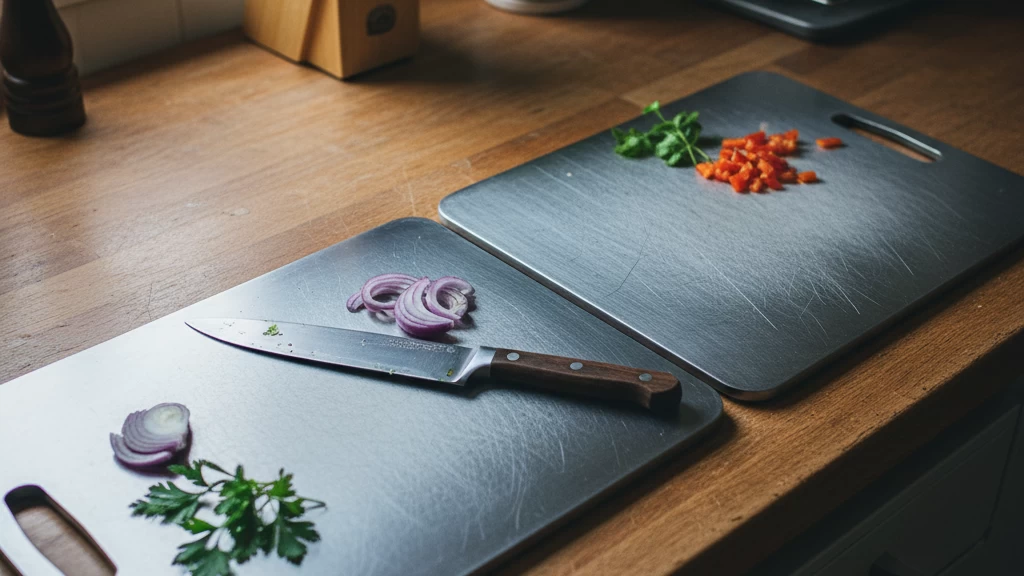
Choosing between a titanium and stainless steel chopping board depends on your kitchen needs, budget, and cooking habits. Here’s a quick guide to help you decide:
| Situation | Pick Stainless Steel | Pick Titanium | Consider Hybrid Boards |
|---|---|---|---|
| Everyday heavy use | Durable, scratch-resistant, budget-friendly | Extremely durable and longer-lasting | Combine metal base with softer surface tops |
| Knife care priority | Less knife-friendly — can dull blades faster | More knife-friendly thanks to smoother surface | Softer cutting layers protect knives |
| Portability & lightness | Heavier and less portable | Lightweight, easy to move and store | Lightweight top with metal support |
| Hygiene & food safety | Easy to sanitise, non-porous | Naturally antibacterial and highly hygienic | Antibacterial surfaces paired with metal base |
| Budget constraints | More affordable entry options | Higher initial cost but better long-term value | Mid-range pricing options |
| Heat resistance needs | Excellent, can withstand hot pots or pans | Also heat resistant, ideal for multifunctional use | Metals combined with heat-resistant layers |
When to Pick Stainless Steel
Opt for stainless steel if you want a robust, low-maintenance board that handles tough use without breaking the bank. It’s great in busy kitchens where durability counts more than the softness of the cutting surface.
When to Pick Titanium
Choose titanium if you’re looking for a premium, ultralight chopping board that’s kinder to your knives while still holding up under rigorous use. It’s ideal for those valuing hygiene and ease of cleaning, especially in smaller kitchens where portability matters.
Hybrid Board Options
Hybrid chopping boards combine the strengths of metals with softer edges or layers, offering a balance between knife-friendliness and durability. These are perfect if you want the benefits of both materials in one board, a popular option in households seeking versatility.
The Titanium Chopping Board Company – Your Local Premium Choice
If you’re after a high-quality titanium chopping board made right here in the UK, The Titanium Chopping Board Company is a top contender. This brand focuses on premium, ethically sourced materials, ensuring every board is not only durable but also environmentally responsible. By supporting local manufacturing, they provide a cutting board designed with British kitchens in mind, balancing performance with sustainability.
Their range includes several standout products, from lightweight, heat-resistant boards to more robust, knife-friendly surfaces ideal for everyday use. Customers benefit from easy maintenance and hygienic prep surfaces that meet UK food safety standards — perfect for both home cooks and professional chefs.