
The Science Behind Knife Dulling What Really Happens on Your Chopping Board
When you cut food on any chopping board, your knife’s edge meets resistance, which gradually affects its sharpness. Knife dulling happens because the fine, hard metal edge bends, chips, or wears away due to friction and impact with the board’s surface. The material of your chopping board plays a significant role in this process.
Soft surfaces like wood cushion the blade, causing less wear, while hard materials such as glass or metal increase the risk of knife edge damage. Titanium chopping boards, often praised for their durability, bring a unique balance. Although titanium is a metal, it’s not as hard as steel knives, so the risk of blade dulling differs compared to traditional metal surfaces.
In essence, knife edge retention depends on how abrasive or forgiving the chopping board material is. Understanding this helps in selecting boards that keep your knives sharp longer, avoiding frequent and frustrating sharpening.
Titanium Chopping Boards vs Traditional Materials A Head-to-Head Comparison
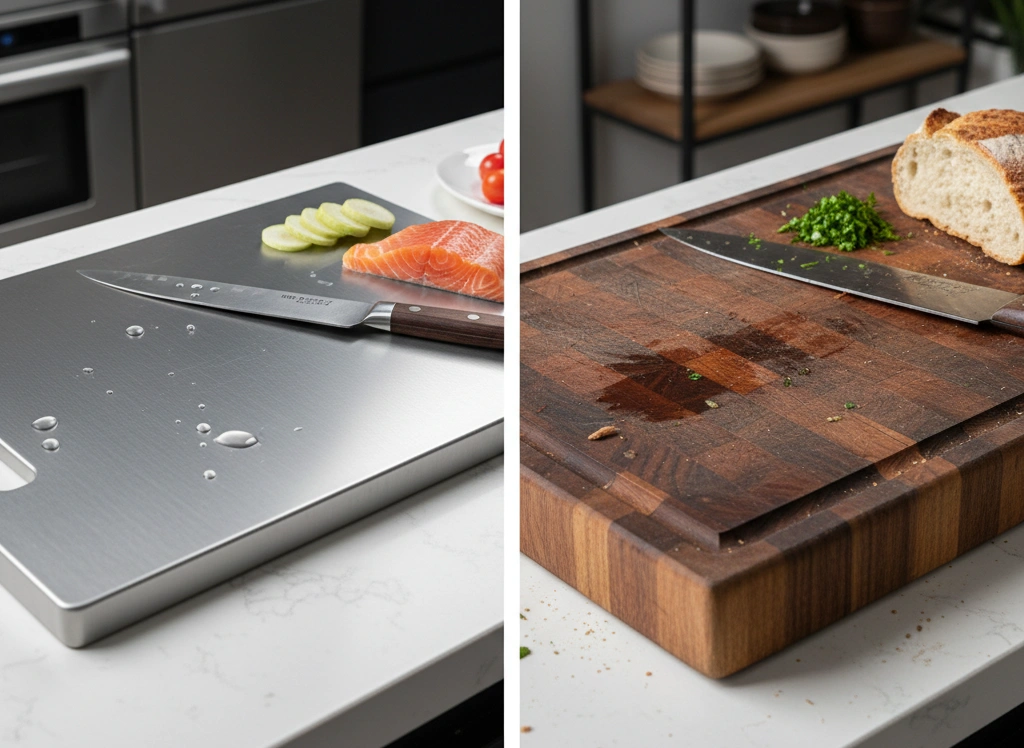
When it comes to chopping boards, titanium is a newer option next to the classic materials like wood and plastic. Here’s a quick look at how titanium chopping boards stack up against the traditional choices popular in kitchens.
| Feature | Titanium Chopping Boards | Wood Chopping Boards | Plastic Chopping Boards |
|---|---|---|---|
| Knife Sharpness | Generally gentle, helps keep knives sharp thanks to a smooth surface | Soft, friendly on knives but can get deep cuts and grooves faster | Harder surface can blunt knives over time |
| Hygiene | Non-porous, easy to clean, highly hygienic for busy kitchens in the UK | Porous, can absorb liquids, prone to bacteria if not maintained | Non-porous but can develop deep scratches harbouring bacteria |
| Durability | Very durable, resistant to warping and cracking | Can warp or crack with heavy use or water exposure | Can warp, melt or stain over time |
| Maintenance | Simple wipe clean, no special oils or treatments needed | Needs regular oiling to prevent drying and cracking | Dishwasher safe but needs replacing once heavily scored |
| Eco Impact | Long-lasting and recyclable, sustainable choice | Renewable and biodegradable but requires care | Mostly plastic, less environmentally friendly |
In short, titanium boards are tough, hygienic and friendly on your knives — a great modern choice for UK kitchens wanting durability without extra fuss. Unlike metal boards, titanium is designed to protect your knife edge retention while offering easy care.
If you want a chopping board that balances knife sharpness, hygiene, and durability, titanium could be the best chopping board for sharp knives UK cooks are after.
Do Titanium Boards Blunt Knives Real Tests and User Insights from the UK
One of the main questions many UK home cooks ask is, do titanium chopping boards blunt knives? Let’s cut to the chase: unlike metal boards, titanium boards are specially designed to be knife-friendly. Real tests from British kitchens show titanium cutting boards maintain knife edge retention far better than other hard surfaces.
Several home chefs and professionals in the UK have tested titanium boards against wood and plastic. The results? Titanium boards cause minimal dulling of knives compared to harder surfaces like glass or steel. This is because titanium has the right balance of durability without being excessively hard on the blade.
From user insights gathered on various UK cooking forums and reviews, the key benefits of titanium chopping boards are:
- Less blade wear compared to metal and glass boards
- Non-porous surface which means no food particles stuck to the board, keeping it hygienic
- Resistant to deep cuts, so the blade doesn’t catch on uneven surfaces
Many British users also highlight how titanium maintains their knives’ sharpness with regular use, unlike hardwood boards that can cause quicker edge dulling due to their coarser grain.
If you’re after the best chopping board for sharp knives in the UK, titanium is a solid choice. It’s worth noting that proper knife maintenance still matters—regular honing and correct cutting techniques go hand in hand with using titanium boards to maximise knife life and performance.
In , titanium chopping boards blunt knives far less than many expect, making them a durable and effective option for UK kitchens looking to preserve knife sharpness.
Maximizing Knife Sharpness with Titanium Chopping Boards Pro Tips
Keeping your knives sharp when using titanium chopping boards is easier than you might think. Here are some practical tips to get the most out of your knife’s edge:
- Use the right knife: Pair your sharp knife with a quality steel blade. Softer or lower-grade knives may wear faster, even on titanium boards.
- Cut with care: Avoid twisting or forcing your knife through tough food. A smooth, straight cut helps preserve the knife edge.
- Clean your board properly: Wash your titanium board with warm, soapy water after use. Being non-porous, it won’t absorb juices, but a clean surface prevents residue that could dull blades.
- Use a wood or bamboo side for delicate work: Some titanium boards come with a wooden side. Using it for lighter chopping helps maintain knife edge retention.
- Regular knife maintenance: Sharpen your knives frequently using a proper steel or sharpener. Titanium boards are knife-friendly but don’t replace regular honing.
- Avoid metal-on-metal contact: Don’t use metal utensils or knives aggressively on the titanium surface to protect both blade and board.
- Rotate your chopping spots: Changing where you cut on the board spreads wear evenly, helping your knife edge last longer.
Titanium chopping boards offer durability and hygiene without compromising knife sharpness. Following these tips ensures your knives stay keen and your kitchen runs smoothly. For British kitchens looking for a durable knife-friendly board, titanium is an excellent option.
Why Choose Titanium Chopping Board Hygiene Durability and Sustainability for British Kitchens
Choosing the right chopping board is key for every kitchen. Titanium chopping boards tick all the boxes for hygiene, durability, and sustainability, making them a smart choice for British cooks.
Hygiene
- Non-porous surface: Unlike wooden boards, titanium boards don’t soak up liquids or food juices. This means fewer bacteria hide spots.
- Easy to clean: A simple wipe or quick wash keeps your board spotless and fresh.
- Resistant to stains and odours: No awful smells sticking around after chopping onions or garlic.
Durability
- Hard-wearing: Designed to last, titanium boards resist deep cuts and scratches that can ruin other boards.
- Knife-friendly surface: Despite being tough, they’re gentle on knife edges, helping maintain sharpness longer.
- Corrosion proof: No rust or wear, even with heavy use in busy kitchens.
Sustainability
| Feature | Titanium Chopping Board | Traditional Wood Boards | Plastic Boards |
|---|---|---|---|
| Lifespan | 10+ years | 2-3 years | 1-2 years |
| Recyclable | Yes | Sometimes | Rarely |
| Environmental Impact | Low (due to long use) | Moderate (harvesting) | High (plastic waste) |
- Long-lasting: Fewer replacements, less waste.
- Recyclable metal: When it’s time to replace, titanium boards can be recycled easily.
- Eco-friendly choice: Helps reduce plastic use and deforestation linked with other boards.